
Thirteen Ghosts in PVC Figure Production — A Defect Atlas for Injection Molding Engineers
Every PVC figure production line has its ghosts. They do not show up on the CAD renderings or the cost spreadsheet. They materialize somewhere between the hopper and the mold opening — a short shot that leaves a character's hand missing, a sink mark that hollows out a shoulder pad, a weld line that splits a helmet into two visible halves. In PVC figure production, these defects are not random accidents. Each one has a mechanical signature, a root cause that can be traced back to the machine, the mold, the process, or the material — sometimes all four at once.
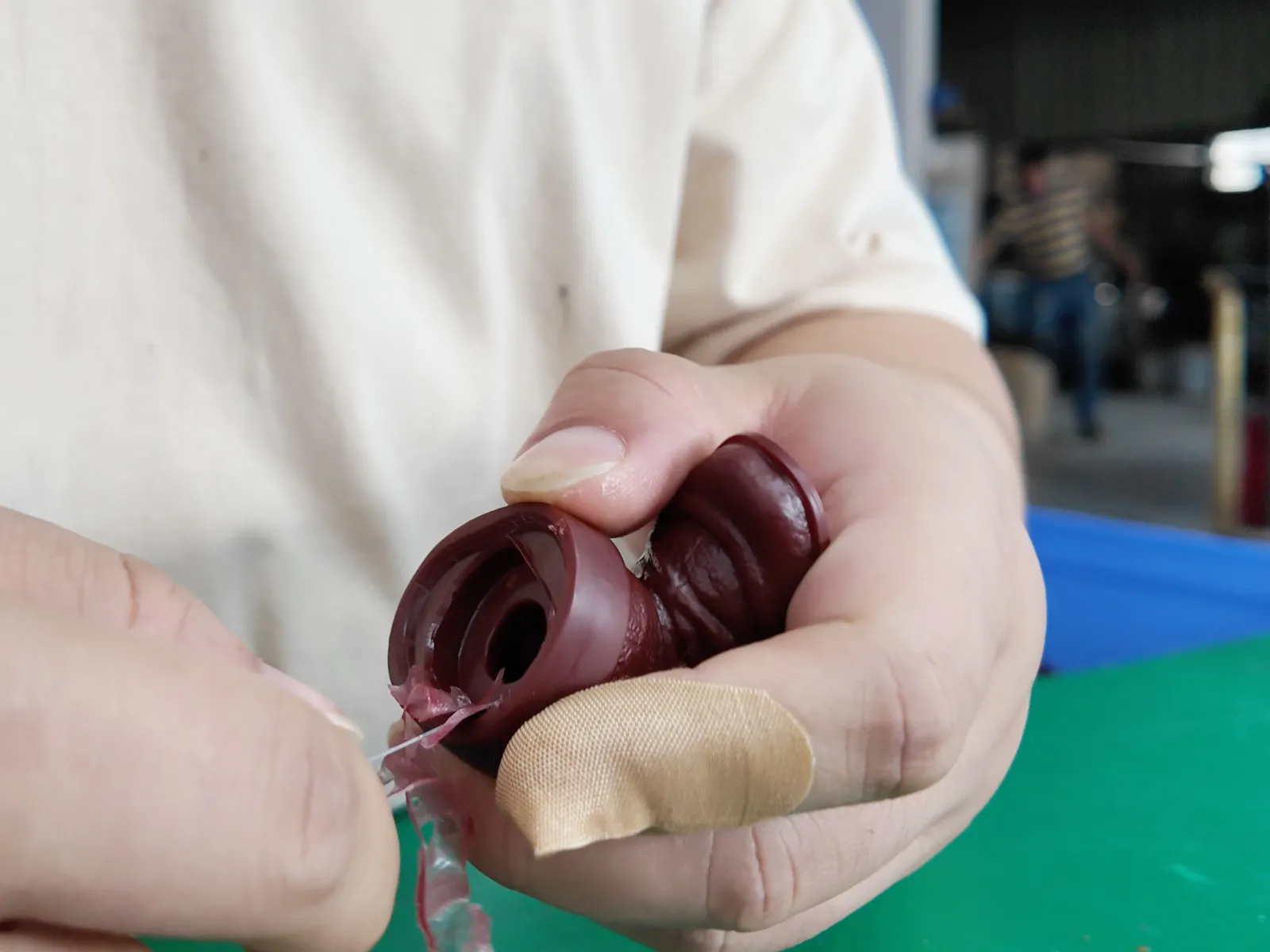
1. Short Shot — The Half-Printed Figure
A short shot is the most recognizable defect in PVC figure production: the molded part is incomplete, missing a finger, an ear, or an entire limb because the cavity never filled. It looks like a figure that stopped mid-birth. Short shots usually trace back to one of six machine-level problems: an undersized injection unit, a barrel running cold despite the controller reading hot, a partially blocked nozzle orifice, cold slug drool blocking the gate entrance, inadequate venting trapping air in deep cavity corners, or multi-cavity molds with unbalanced gate layouts starving one cavity while another fills. Process fixes: raise injection pressure, extend injection time, increase injection speed for thin-wall sections, raise melt temperature. The cardinal rule: change only one parameter at a time.
2. Flash — The Unwanted Outline
Flash is the excess material that escapes along the mold parting line or around core inserts and shows up as a thin fin on the PVC figure production part. It begins when clamp force is insufficient for the projected cavity area — if the machine's rated lock force is lower than the force generated by injection pressure, the mold literally opens under pressure. Misaligned toggle mechanisms, worn tie-bars, and warped platens produce a part with flash on one side and a short shot on the other. Mold causes include parting surfaces that are not flat, core inserts with poor fit tolerances, and cavities positioned off-center. Flash that goes unchecked will progressively crush the parting surface and create permanent cavity-edge collapse. Process fixes: reduce injection pressure and speed, lower melt temperature, extend hold pressure time instead of adding more material volume.
3. Sink Mark — The Hollow Shoulder
Sink marks — depressions on the figure surface where thick sections shrink away from the cavity wall — appear behind reinforcing ribs, around embedded metal inserts, and anywhere wall thickness jumps more than 50% in a single step. The root cause is volumetric: the thick section holds more heat, stays molten longer, and contracts more than the thin wall next to it. If hold pressure cannot reach that thick zone before the gate freezes off, the surface sinks. Machine-level causes include a worn screw or check ring that leaks melt back during hold pressure. Mold-level fixes: enlarge the gate, position it at the thickest wall section, balance the runner system in multi-cavity molds, and use thermal balancing — raise mold temperature at thick zones and lower it at thin zones. Process: increase hold pressure and time, adjust melt temperature based on whether the sink is caused by insufficient packing or excessive volumetric shrinkage.
4. Silver Streaks, Bubbles, and Voids — The Gas Invasion
When gas invades the melt stream in PVC figure production, it leaves three signatures: silver streaks (surface marks), bubbles (visible spherical voids), and hidden internal cavities. The most common gas source is moisture in undried resin — pellets release steam at melt temperature. Other sources include volatile additives decomposing from excessive barrel temperature, regrind material carrying trapped air, and contaminated resin mixed with foreign polymers. Mold causes: gates and runners that are too small, creating shear-heat decomposition, insufficient venting, and excessive mold release agent that vaporizes under injection pressure. The process fix follows a four-stage injection profile: medium speed to fill the runner, slow speed to pass the gate (reducing shear), fast speed to fill the cavity body, then slow speed and low pressure to top off — giving trapped gas time to escape at every stage transition.
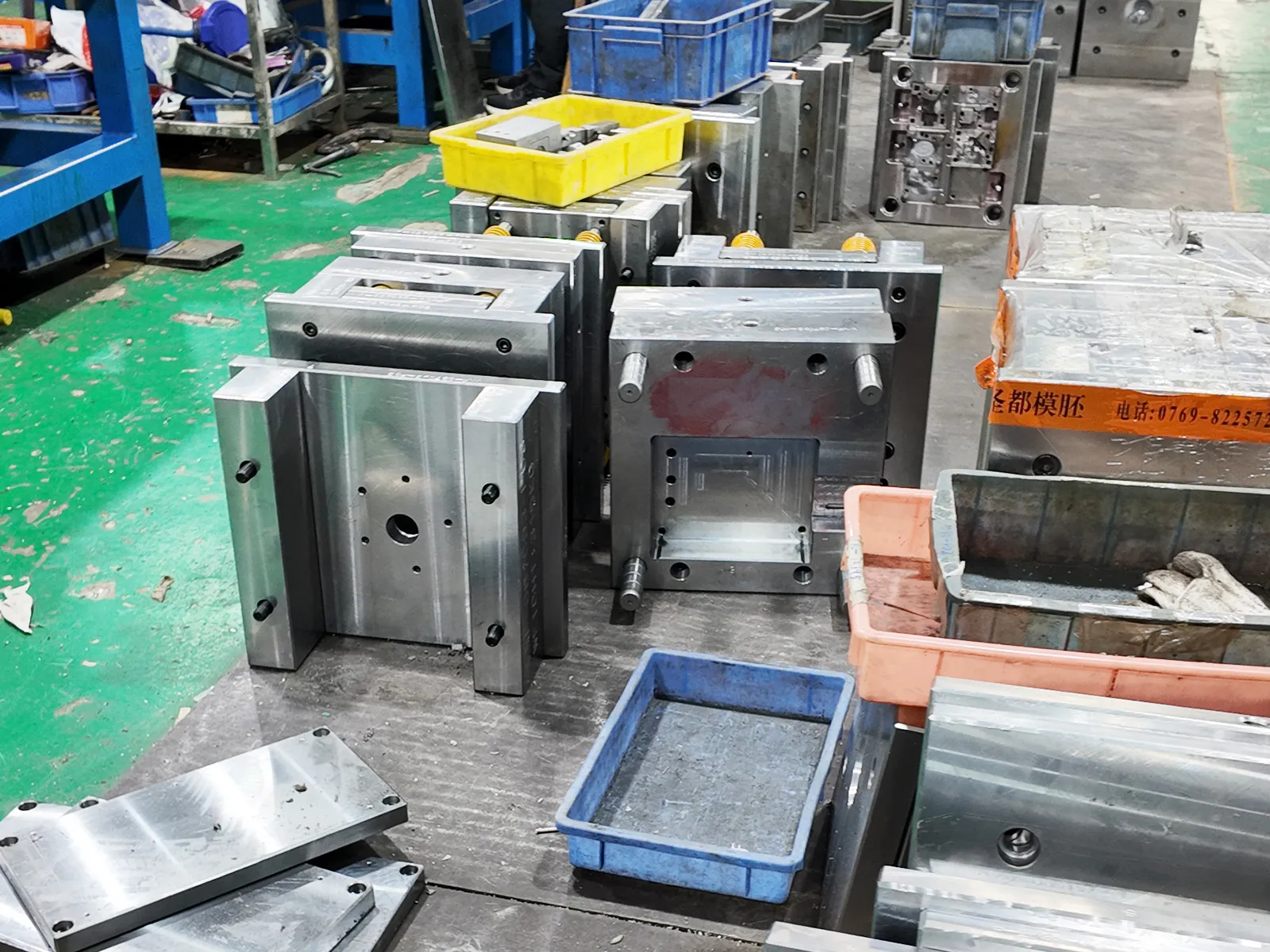
5. Weld Line — The Visible Seam
A weld line forms when two separate melt streams meet inside the cavity — around a core pin, behind an insert hole, or where multiple gates converge. It is not just cosmetic; it is a structural weakness. The two melt fronts cool during their separate travels, and when they meet, their interface temperature is lower than the bulk melt, so molecular chains at the seam do not intertwine fully. On a figure's arm joint, a weld line can reduce impact strength by 30–50%. Machine causes: poor plastication — the screw does not generate a homogeneous melt temperature. Mold causes: cavity surface too cold at the weld zone, runners too small, inadequate venting at the convergence point. The weld zone should always have a dedicated vent pin. Process fixes: raise injection pressure and speed, raise melt and nozzle temperature, increase back pressure and screw speed for uniform melt. One counter-intuitive trick: deliberately lower clamp force slightly at the weld zone to let trapped air escape through the parting line.
6. Brittleness — The Figure That Snaps
Brittleness means the part fractures during ejection or cracks under minor impact after delivery. It is not cosmetic — it is a mechanical failure, and it almost always traces back to internal stress or material degradation. Machine causes: barrel dead spots holding old material at high temperature, a plastication unit too small (incomplete melting) or too large (excessive heat and shear), misaligned ejection with too few or too small pins. Mold causes: gates too small creating high shear degradation, runners too narrow, mold temperatures too low preventing proper fusion or too high making ejection difficult. Process: the barrel temperature window for PVC is narrow — 160–190°C for rigid PVC and 140–170°C for soft PVC — running outside this window in either direction creates brittleness. Material: contamination by foreign polymers, excessive regrind content (cap below 20% for structural components).
7. Discoloration — The Wrong Hue
Discoloration in PVC figure production is when the molded part's surface color deviates from the specified shade — yellowing, darkening, or uneven tint. Even slight discoloration is a full reject where color fidelity is a primary quality criterion. Machine causes: a dirty barrel carrying degraded residue from previous runs, a failing thermocouple allowing temperature overshoot (PVC is heat-sensitive — even a 10°C overshoot can yellow the material), foreign metal objects in the screw flight generating friction-heat decomposition. Mold causes: poor venting creating adiabatic compression that scorches the surface, gates too small forcing material through high-shear zones, excessive silicone-based release agent causing surface haze. Process fixes: reduce screw speed and back pressure, lower barrel and nozzle temperatures to specification range, and if barrel contamination is the cause, perform a full purge before continuing production.
8. Black and Brown Spots — The Charred Remnants
Black or brown spots on a PVC figure production part are visible evidence of carbonized polymer residue carried into the cavity on the melt stream. They are particularly damaging on light-colored figures where even a single speck is immediately visible. The primary cause is stagnant material in the barrel — dead zones behind the check ring, in nozzle gaps, or at the screw tip hold small quantities of PVC that sit at processing temperature for dozens of cycles. PVC's thermal stability window is famously narrow; even 5–10 minutes of excess residence time can push it past the degradation threshold. Mold causes include narrow wall sections creating excessive shear heat, oil leaking from the ejector plate into the cavity. The fix: pull the screw and nozzle, clean every polymer-contact surface, and establish a purge routine that flushes the barrel between material changes.
9. Cracking — The Stress Fracture
Cracking — surface micro-cracks or through-thickness fractures — is the endpoint of internal stress that was never relieved. It differs from brittleness in that the part may feel strong initially and only crack days or weeks later, escaping in-line QC and only appearing after shipment. Machine causes: under-plasticated material creating internal stress concentrations that later become crack initiation sites. Mold causes: inadequate venting creating trapped-air voids (stress risers), gates too large overpacking the cavity, internal water leaks from cracked cooling channels, insufficient draft angles forcing the part to scrape against the cavity wall during ejection. Process: barrel temperature too high (degradation stress) or too low (cold-slug stress), excessive injection pressure, cooling time too short. Annealing — heating the part to 80–100°C for 30–60 minutes after molding — is a proven method for relieving residual stress that causes delayed cracking.
10. Surface Roughness — The Orange Peel
Surface roughness — a dull, grainy, or inconsistent gloss — directly affects perceived quality. In PVC figure production, where matte, gloss, or textured finishes are part of the specification, any deviation is a reject. Machine causes: cold drool from the nozzle tip creating a dull surface at the gate zone — raise nozzle temperature and verify the heater band is drawing power. Mold causes: gates too small, runners too narrow, cavity surface poorly polished or stained by cooling-channel water leaks, inadequate venting at low-gloss zones, mold temperature too low. A simple diagnosis: if the defect disappears when you raise mold temperature by 10°C, the mold was too cold. Process fixes: raise melt temperature by 5–10°C, increase hold pressure. When surface roughness persists despite process adjustments, the root cause is almost always in the mold — either the cavity polish or a cooling channel leak.
11. Ejection Difficulty — The Stuck Figure
Ejection difficulty means the part adheres to the cavity or core and cannot be released cleanly. Every stuck part costs cycle time, risks surface damage, and creates operator fatigue. Mold causes dominate: undercut features with no slide mechanism, insufficient draft angle (even 0.5° can make the difference), cavity surfaces that are scratched or paradoxically too highly polished (vacuum seal between smooth steel and smooth PVC skin), and ejector pin systems that are too few or poorly positioned — complex character figures often need 10–15 ejector pins distributed across the underside. Process causes: overpacking, excessive melt temperature, hold time too long (gate bonds to sprue), cooling time too short (part still soft) or too long (part shrinks onto core and locks). The correct cooling window is narrow — long enough to solidify but short enough that the part has not fully shrunk onto every core detail.
12. Warpage — The Twisted Figure
Warpage is when the molded part's shape deviates from the cavity geometry — an arm curls inward, a base plate bows, a weapon accessory twists. It is caused by differential shrinkage: different regions cool at different rates or are constrained differently by the mold. Warpage is the defect that most often prevents parts from assembling correctly. Mold causes: insufficient cooling at thick sections, gates at thin sections instead of thick ones, runners too small creating orientation stress, core-cavity offset creating uneven wall thickness (even 0.1mm asymmetry can produce visible warpage on long thin components). Adding reinforcing ribs to long flat sections is a standard countermeasure. Process fix: post-mold fixture cooling — clamp the freshly ejected part into a steel or aluminum jig that holds the correct shape while it finishes shrinking. Many facilities maintain dedicated fixture sets for every warp-susceptible component.
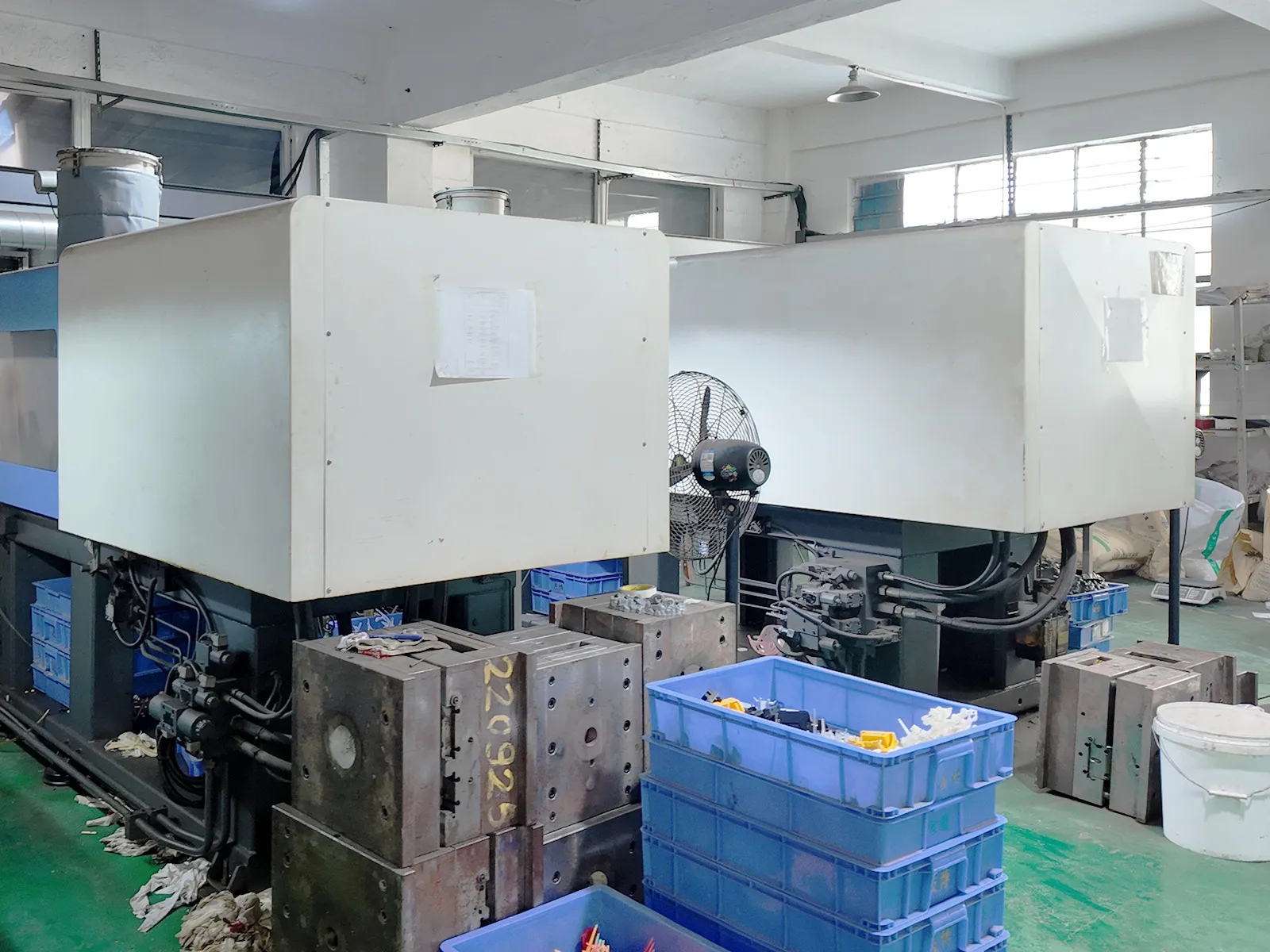
13. Dimensional Instability — The Shifting Spec
Dimensional instability means the same part measured across consecutive cycles shows variation beyond allowed tolerance — a peg diameter fluctuates, a slot width shifts, a base plate footprint expands and contracts by fractions of a millimeter that nonetheless prevent assembly. Machine causes: different machines produce different dimensions from the same mold due to barrel thermal profiles, screw geometry, and hydraulic response. Melt temperature fluctuations from thermocouple failure, inconsistent buffer pad volume (even 0.5mm variation shifts final dimensions), and intermittent check ring leakage. Mold causes: debris intermittently blocking the gate, partially clogged cooling circuits, mold components that loosen or wear — a slide mechanism losing 0.05mm of fit tolerance over 10,000 cycles produces progressive dimensional drift. Process: lock down every parameter, verify them every shift, and run statistical process control on critical dimensions so drift is caught before it accumulates.
The Troubleshooting Rule That Actually Works
Across all thirteen defects in PVC figure production, one principle repeats: change one variable at a time. When a figure shows a short shot and the engineer simultaneously raises barrel temperature, increases injection pressure, and extends hold time, the defect may disappear — but no one will know which adjustment actually worked. Next time the defect returns, the team applies all three changes again, the overcorrection creates a new defect, and the cycle continues. The disciplined approach: identify the most likely single cause, make one adjustment, run three to five cycles, observe, then decide the next step. This is slower than the "fix everything at once" instinct, but it builds a knowledge base that actually prevents the ghost from returning.
The other principle: every defect has both a process fix and a design fix. Process fixes are temporary — they hold until the next material batch, the next machine, or the next operator shift. Design fixes (better gate placement, adequate venting, uniform wall thickness, proper draft) are permanent. The best PVC figure production teams use process troubleshooting to get through the current run, then immediately translate findings into mold and product design changes that eliminate the root cause for every future run. Many of the thirteen ghosts trace back to the resin itself — moisture, contamination, excessive regrind, incompatible additives. Dry the material to specification (PVC needs 2–4 hours at 80–90°C), cap regrind at tested ratios, purge the barrel between material changes, and store resin in sealed containers. The material that enters the hopper determines what comes out of the mold — and every ghost in this atlas can be kept outside the factory door if material discipline is maintained from the warehouse to the feed throat.