
Before the Box Is Sealed: The Unseen Design Journey of Custom Blind Box Figures
Every custom blind box figures collector knows the ritual. You tear the foil, slide out the card, and there it is — a 10-centimeter figure with a face that somehow reads both cute and slightly melancholy, a costume detail you did not notice in the promotional art, a paint application that catches the light at exactly the right angle. What you are holding is the end of a design pipeline that started months earlier, with nothing more than a sketch and a conversation. Designing custom blind box figures is not the same as designing a toy. A toy is made to be played with. Custom blind box figures are made to be displayed — on a shelf, in a glass cabinet, photographed for social media. They have to look good from a single fixed viewing angle and survive close-up scrutiny under a collector's phone flashlight.
Phase One: The Paper Stage
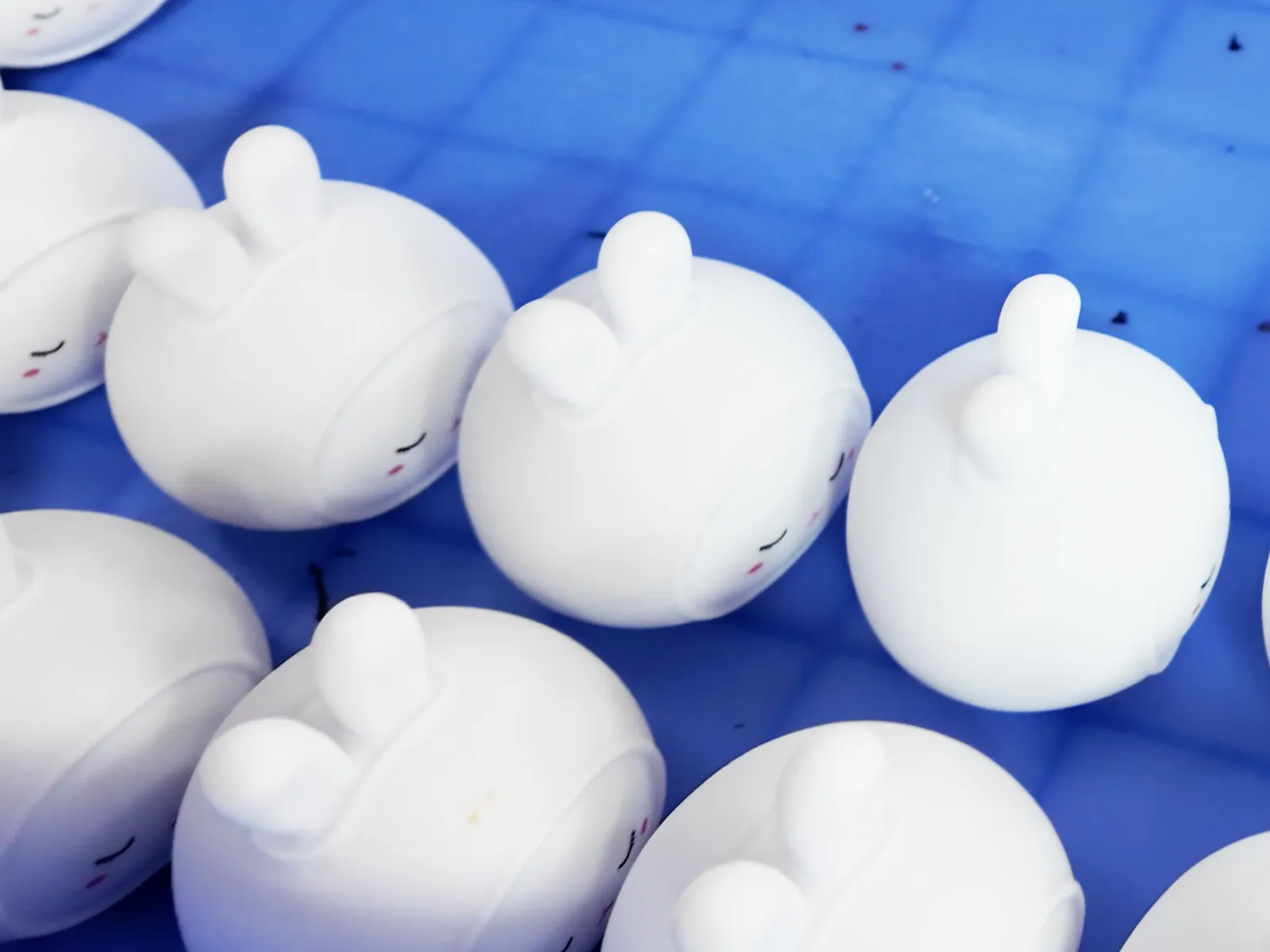
The design of custom blind box figures starts the way most product design starts: a client provides something — a detailed 2D turnaround, a reference sheet for a licensed IP, or nothing more than a mood board and a verbal brief. The product development department's first job is not to sculpt. It is to decompose. They count the parts: head, body, arms, accessories, base. They identify the separation lines — where a vinyl figure head splits from the body, where an injection-molded accessory will be molded separately and snapped on later. Every parting line is a design decision, because every parting line is a mold cavity, and mold cavities cost money. A single custom blind box figures design with five separate parts requires five molds. Add a sixth, and you add 15–20% to the tooling budget.
The decomposition also forces a process decision: which parts are injection molded and which are rotocast? For custom blind box figures, the answer is usually both. The figure head — hollow, requiring uniform wall thickness, needing to capture the subtle asymmetry of an anime face — goes to rotocasting. The body, the weapon accessory, the display base — solid, geometrically regular, high volume — go to injection molding. The designer who does not know the difference between these two processes, or who designs a head with wall-thickness variations that a rotocasting furnace cannot handle, has already built failure into the product before a single mold is cut.
Phase Two: The Hand Sample
Once the part count and process assignment are locked, the hand sample is made. This is the first physical manifestation of the design, and it is entirely handmade — usually by a sculptor using oil-based clay or epoxy putty over a wire armature. For custom blind box figures, the hand sample is the moment of truth — the first time anyone can hold the design in their hands. The sculptor has to interpret a 2D drawing into 3D, making judgment calls about depth, proportion, and the way a character's expression reads from a 15-degree downward angle — which is how most collectors will actually view custom blind box figures on the shelf.
The hand sample is also the first time the design confronts physics. A character with an extended arm holding a staff looks dynamic on paper. In 3D, that arm is a cantilever — a thin PVC beam that will sag under its own weight during rotocasting or warp during cooling. The sculptor, working with the product engineer, may need to thicken the arm, add a support post hidden inside a sleeve, or redesign the pose entirely. This is not a failure of design; it is design refinement. The hand sample is reviewed internally, measured against the client's reference art, and either approved or sent back for revision. If it passes, the clay master is immediately sacrificed — encased in silicone to make the negative mold that will generate the wax master that will electroform into the first copper mold. The hand sample exists for maybe a week. Its job is to be right enough to die.
Phase Three: EP — The Engineering Prototype
The first set of production-intent molds produces the Engineering Prototype (EP). The EP exists to answer one question: does the product work? For custom blind box figures, this is the most humbling phase of development. "Work" means the parts fit together, the snap-fit joints engage without cracking, the rotocast head has consistent wall thickness, and the overall assembly matches the hand sample within tolerance. The EP is tested for basic safety and structural integrity. If a part breaks during assembly, the mold geometry is modified. If a rotocast head comes out of the furnace 1 mm too small — because someone got the shrinkage ratio wrong — the master mold is remade. The EP phase is where the dream of designing custom blind box figures collides with the reality of a 250°C furnace and a 130-ton injection molding machine, and the design always yields.
The EP phase also reveals something that paper and clay cannot: the figure's presence at actual scale. A design that looked balanced in 3D modeling software may feel visually wrong when held in the palm. The head-to-body ratio may read differently. The base may be too small to prevent tipping. These are not manufacturing defects; they are design defects that only become visible when the design is physically realized, and they are corrected — mold by mold, tweak by tweak — during the EP cycle.
Phase Four: FEP — The Final Engineering Prototype
The Final Engineering Prototype (FEP) is not an engineering sample. It is a sales sample — the version of custom blind box figures that the client will use to pitch retailers, photograph for pre-order pages, and present to the IP holder's licensing team. By this point, the molds are within tolerance, the parts assemble cleanly, and the structural issues have been resolved. Now the focus shifts to what collectors actually care about: surface decoration. The FEP goes through the full finishing chain — spray painting, pad printing, and any other surface treatments the design calls for. The paint masks are cut. The pad-printing clichés are etched. The spray-paint operator, working with a hand-cut copper mask, applies the exact color gradient specified in the design brief.
The FEP is also where packaging design is finalized. The blind box itself — the foil pouch, the card, the box art, the unboxing experience — is designed and tested at this stage. For custom blind box figures, the packaging is not an afterthought; it is part of the product experience. The client receives the FEP, evaluates it against the original design brief, and either signs off (the OK sample) or sends it back with revision notes. No production molds are made in quantity until the FEP sign-off happens. This is the most expensive gate in the entire design pipeline — placed exactly where it should be: after the design is proven buildable but before the factory commits to 12 or 24 production molds per cavity.
Phase Five: PP — Pilot Production
Pilot Production (PP) is where the design graduates from the engineering lab to the assembly line. A small batch — typically a few hundred pieces for custom blind box figures — is produced using the final production molds, the approved paint processes, the final packaging, and the actual assembly workers who will run the full production. The goal is to prove that the design is not just buildable, but mass-producible. PP reveals the difference between "we made ten perfect ones in the lab" and "we can make a thousand consistent ones on the line." If the paint mask drifts out of alignment after 200 cycles, the fixture needs redesigning. If the assembly workers consistently break a fragile snap-fit during installation, the part geometry needs an adjustment — not to the mold, but to the assembly fixture or the sequence of operations.
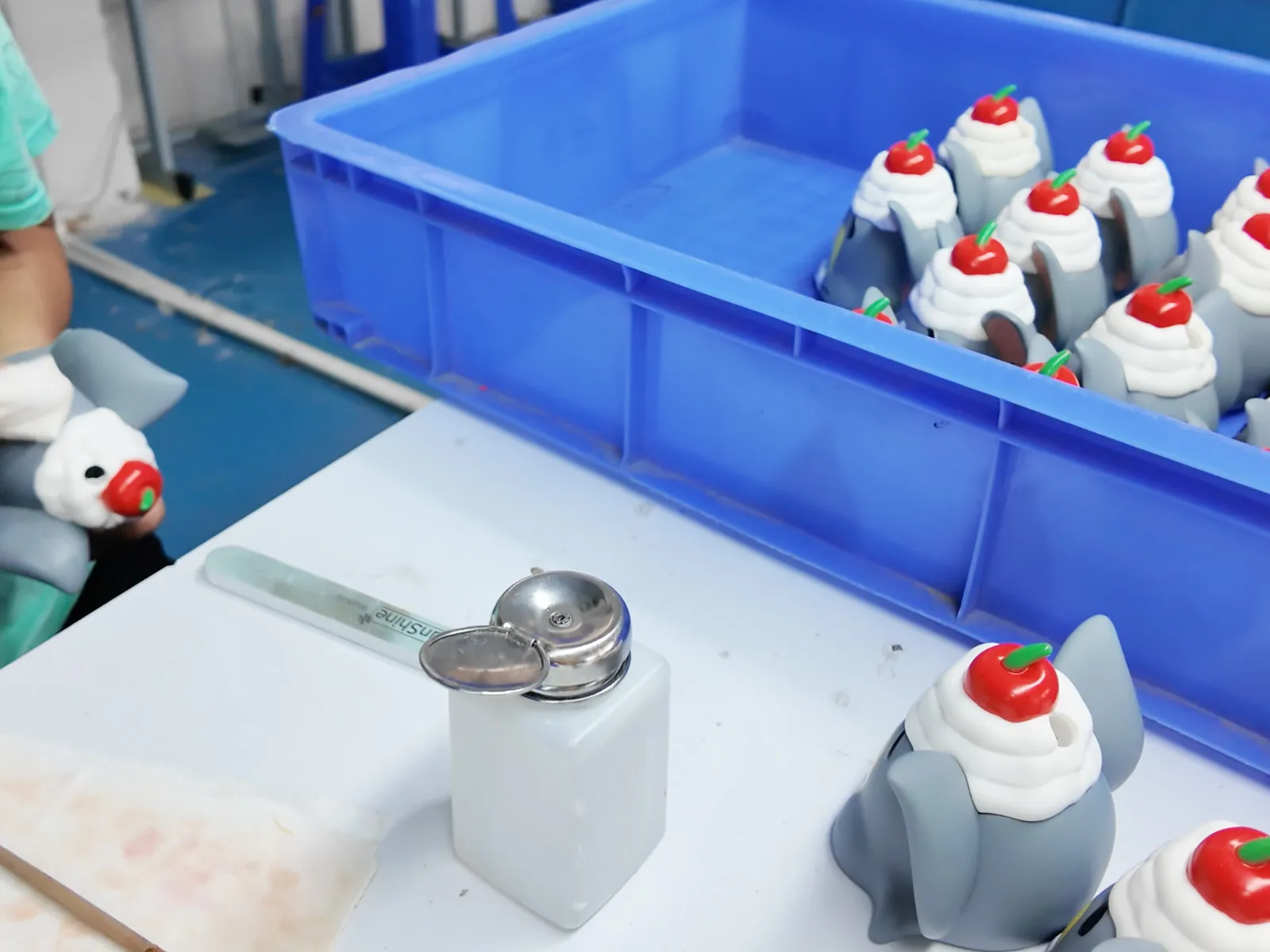
The PP batch is reviewed by QC against the approved OK sample. If it passes, the client issues the PP shipment approval, and the design is officially released for mass production. The journey from sketch to OK sample to PP sign-off can take anywhere from 8 to 16 weeks for custom blind box figures, depending on complexity, mold count, and the number of revision cycles. For custom blind box figures with complex paint schemes, intricate accessories, or IP-holder-mandated revision rounds, 16 weeks is optimistic.
The Unseen Disciplines
Behind each phase of the custom blind box figures design process is a constellation of specialist departments that most collectors never hear of. The mold department designs and cuts the molds — the physical hardware that gives custom blind box figures their shape. The cliché department etches the pad-printing plates. The color-matching department formulates paint recipes to match the client's Pantone specifications. The hand-sample department sculpts the clay masters — the first tangible expression of every design. The fixture group designs the assembly jigs that position parts for gluing and ultrasonic welding. None of these people appear on the box, but the design of custom blind box figures is literally impossible without them. A character designer in Tokyo or Shanghai may produce the concept art, but it takes a factory floor of engineers, sculptors, painters, and toolmakers to translate that concept into a figure produced 3,960 times per day — and still look identical to the OK sample.
Designing custom blind box figures is not just about aesthetics. It is about designing a product that can survive the journey from art to mold to furnace to assembly line to packaging to container ship to retail shelf — and still look like it was worth collecting. Every decision in that pipeline — how many parts, which process, what shrinkage ratio, where to put the parting line, how thick to make the wall, when to sign off and when to revise — is a design decision. The next time you tear open a custom blind box figures pouch, look at the figure inside not as a finished product but as a solved problem — the last link in a chain of decisions that started with a pencil and ended with a QC stamp. The box is sealed, but the design that made it possible is wide open.