
The Invisible Craft Behind Every Customized Blind Box: Hand-Spray Painting on the Factory Floor
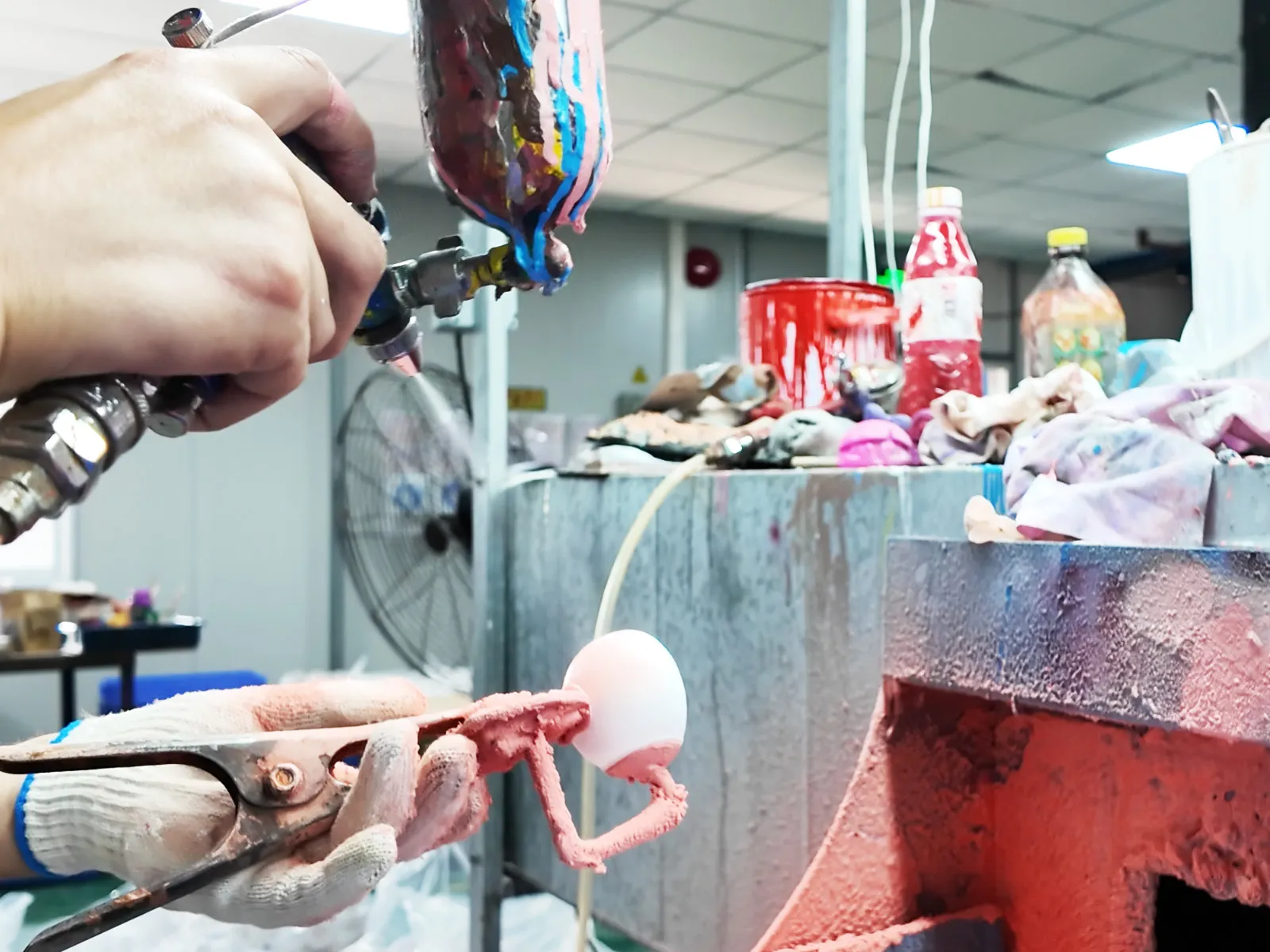
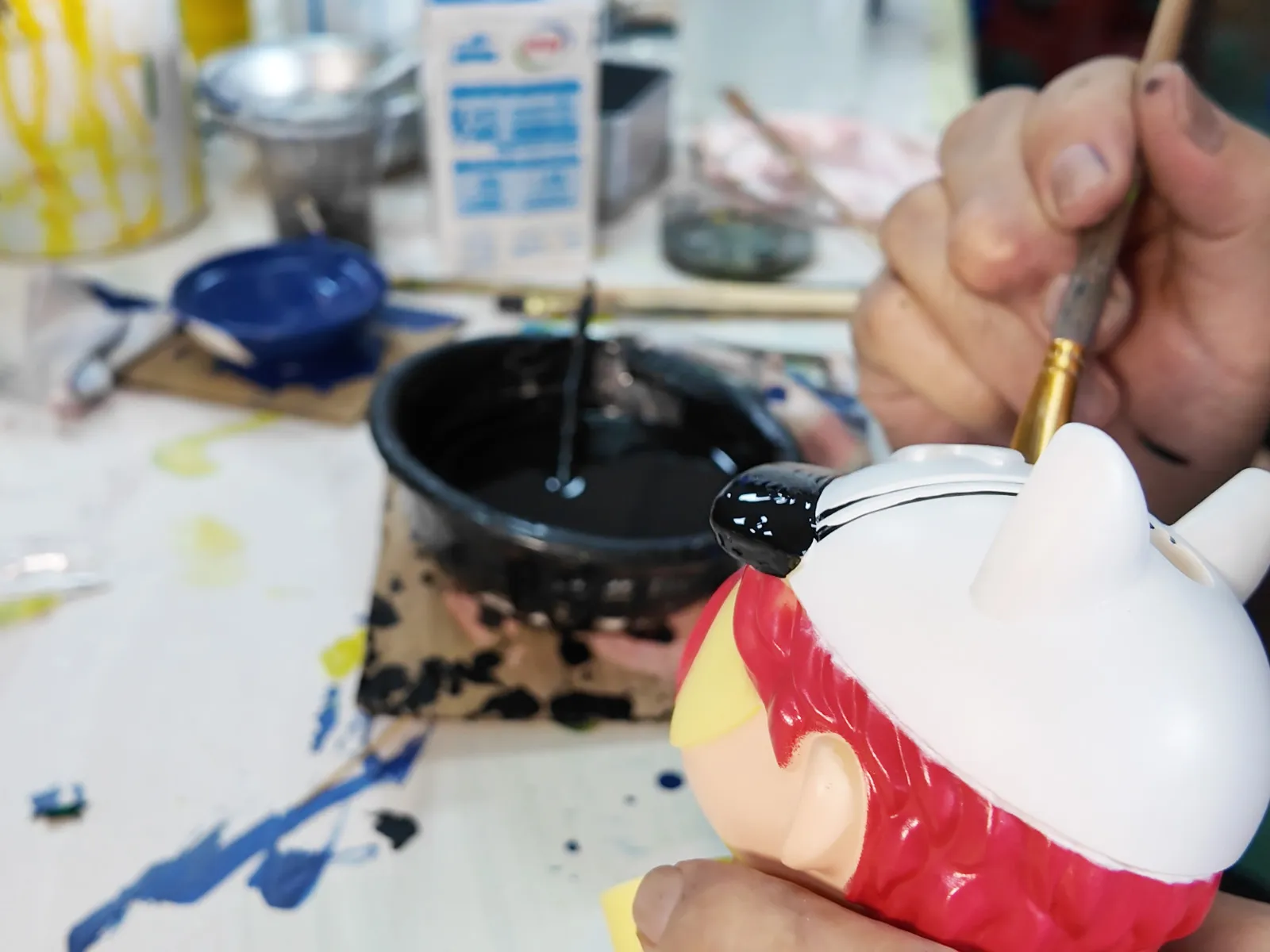
Peel open a customized blind box and the first thing you notice is the paint. The cheek blush on a six-centimeter anime figure. The two-tone gradient on a monster's claws. The tiny gold stripe on a robot's visor. Every one of those color zones was laid down by a human hand holding a spray gun, one pass at a time, through a copper stencil cut to match the exact curve of that specific part. No machine does this. No robot. No AI. The paint on a customized blind box figure is proof that someone sat at a workbench for forty-five minutes, masked and sprayed eight to twelve different colors, and did it well enough that you cannot see the seams.
Paint: The Chemistry That Sticks to Vinyl
A customized blind box figure is almost always made from slush-molded soft PVC — the hollow, squeezable body that gives character figures their signature feel. Soft PVC is not an easy surface to paint. The plasticizers in the compound migrate to the surface over time, creating a greasy layer that repels most coatings. That is why the paint on a customized blind box figure is not ordinary house paint or automotive lacquer. It is a specialized vinyl acetate coating — the industry calls it "soft glue oil" — formulated to bond with PVC at a chemical level. Its resin base is PVC-compatible, meaning the solvent system actually softens the top micron of the vinyl surface and interlocks with it rather than just sitting on top. The result is a paint film that flexes with the PVC underneath instead of cracking when you squeeze the figure.
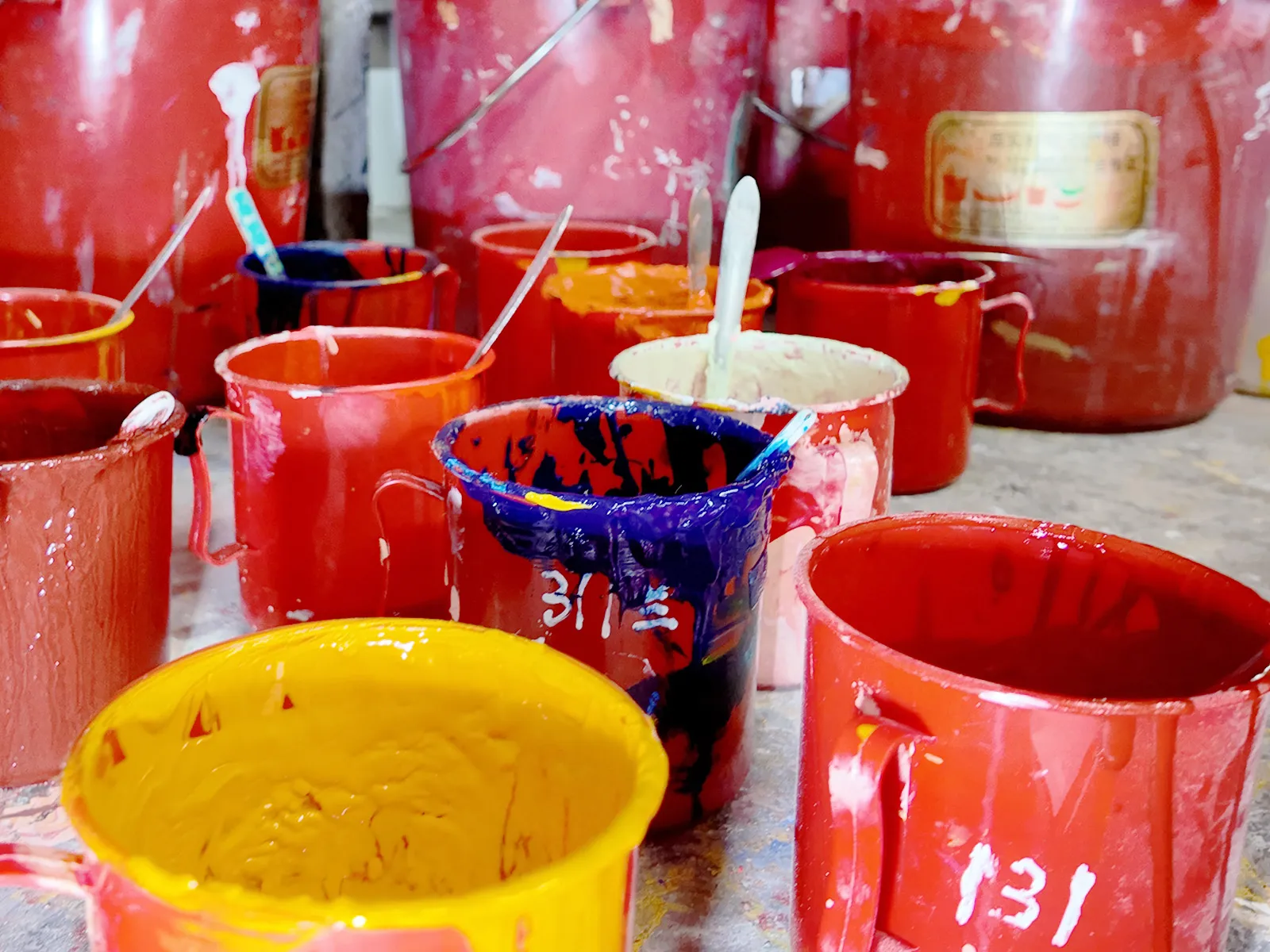
Hard glue oil, by contrast, is an acrylic coating designed for ABS and other rigid substrates — it will not adhere properly to soft PVC. The rule on every customized blind box production line is simple: soft glue oil for PVC bodies, hard glue oil for ABS accessories, and never swap them. Every paint batch for a customized blind box has five components: resin (the binder that forms the film), pigment (color and opacity), diluent (the solvent that reduces viscosity for spraying), additive (matting agents for semi-gloss or flat finishes), and drier (accelerates film formation). Soluble pigments are mixed with thinner and stirred into a color paste. Insoluble pigments are ground to powder, mixed with resin and thinner, and then stirred. For a customized blind box series with six color variants, the paint department will mix six separate batches — one per variant — each tested on sample parts before production starts.
Surface Prep: You Cannot Paint a Dirty Figure
Before any customized blind box part reaches the spray bench, it gets cleaned. Washing with detergent removes mold-release residue, dust from packaging, and skin oils from workers who handled the part during demolding. If mold-release agent is left on the surface, the paint will not stick. Soft PVC parts get a quick dip in trichloroethylene solution — a few seconds, wiped dry — or a soak in a sulfuric acid and potassium chromate solution at 30°C for eight to ten minutes, followed by rinsing and drying. Hard plastic parts may be sanded, solvent-softened, or treated with acetone and butyl acetate to roughen the surface enough for the acrylic coating to key into it. QC checks before painting: no sink marks, no deformation, no flash residue. A warped part will not sit properly in the spray mold, and paint will bleed past the stencil edge — which on a customized blind box figure means a visible color overlap that the customer will spot instantly.
The Spray Gun: Settings That Make or Break a Customized Blind Box
The spray gun is where the craft lives. A worker picks up the gun, sets five parameters, and then everything depends on muscle memory and visual judgment. Air pressure runs at 0.35–0.7 MPa — below that, the paint does not atomize properly and the finish comes out grainy; above that, the paint over-atomizes into a cloud that drifts past the stencil edge and deposits a fuzzy halo around every color zone. Paint viscosity is measured at 15–26 seconds with a Ford flow cup — too thin and the paint runs and drips; too thick and it sprays in blobs, leaving a visible ridge when you lift the stencil off.
Gun-to-part distance stays at 20–40 cm. Too close and the paint floods the stencil opening. Too far and the atomized mist scatters, reducing coverage density and wasting paint. Spray direction must be perpendicular to the surface — if the gun angle tilts, the paint hits the stencil wall instead of the part, and coverage becomes uneven. Each stroke overlaps the previous one by roughly one-third of the spray width, ensuring even film thickness. Gun speed runs at 30–60 cm/s — slow enough to build a proper film, fast enough to avoid pooling. The best operators develop a metronomic rhythm: the same speed, the same overlap, the same distance, every single pass. After each color, the gun gets cleaned. Residual paint in the nozzle dries into a hard plug that blocks the next color. On a customized blind box figure with eight colors, that means eight cleaning cycles per part.
Spray Molds: Copper Stencils That Define Every Color Zone
A customized blind box figure does not get painted freehand. Every color zone — the cheek, the eye white, the lip tint, the shoe accent — has its own spray mold, a copper stencil electroformed to match the exact surface contour of that specific area. Making one starts by selecting a good vinyl part, spraying it with a conductive gold powder coating, and suspending it in a copper sulfate electroplating bath. Over eight to ten hours per millimeter of thickness, copper ions deposit onto the conductive surface, building a shell that mirrors the part's geometry exactly. The average customized blind box spray mold is about 1.5 mm thick. After plating, a bench worker cuts the copper shell into individual stencils, opens windows at each color zone, and polishes the edges so they seal cleanly against the vinyl surface.
There are two types: an edge mold is a single copper plate for single-surface zones like a chest emblem, taking two to three days to make. A clip mold is two copper plates hinged together, enclosing the part for wrapped zones like a shoe, taking four to six days. Every mold carries a number that matches a specific color zone. A customized blind box with twelve color zones has twelve numbered molds. The spray operator checks the number before each pass — using the wrong mold means paint lands in the wrong zone, a defect that cannot be reworked, only scrapped.
Process Sequencing: Why Order Matters
A customized blind box figure with multiple colors cannot be sprayed in a random sequence. The paint department follows a strict set of rules. First, one color per process step — each color is a separate production pass with its own mold, its own gun setting, and its own drying time. A figure with eight colors takes eight passes. Second, inside first, outside second — interior color zones like the mouth interior are sprayed before exterior zones, because flipping the part to spray the interior after the exterior is painted risks smudging the outside finish. Third, light colors first, dark colors second — when two adjacent zones share a stencil edge, the lighter color goes down first. The darker color overlaps the boundary slightly, and the overlap is invisible because dark over light does not show, but light over dark does.
Two more rules: if two pattern zones on the same part are less than a few millimeters apart, they should be separated into two process steps rather than cut into the same stencil — a thin copper bridge between two openings breaks after a few hundred spray cycles. And when two painted surfaces meet at a sharp angle, splitting them into separate steps prevents the stencil edge from rubbing against the previously painted surface and scratching it.
Open-Oil-Water: The Thinner That Controls Everything
Paint thinner — "open-oil-water" in the industry — is not a single product. It is a solvent blend tuned to the substrate, the paint type, and the ambient humidity on the production floor. For a customized blind box made from soft PVC, the thinner blend contains xylene (resin solvent), acetone (degreaser), cyclohexanone (wetting agent and leveling improver), and normal propanol (viscosity reducer). For ABS hard-glue paint, the blend shifts to xylene and toluene, anti-white agent (slow evaporator that prevents blushing in humid conditions), MEK and white electric oil, butyl acetate, and normal propanol.
Get the blend wrong and the problems show up immediately: blushing (a white haze from moisture trapped under fast-drying solvent), orange peel texture (solvent evaporated too fast before the paint leveled), or crawling (the paint retreats from edges because the solvent attacked the substrate). Seasonal adjustment matters. In a Dongguan summer when humidity hits 85 percent, the thinner blend gets more slow-evaporating solvent to prevent blushing. In a dry winter, the blend shifts toward faster evaporation so the paint does not stay wet long enough to sag. Every customized blind box paint department has a senior technician who adjusts thinner ratios daily — this is not a job for a formula sheet, it is a job for someone who has watched paint dry in both seasons for ten years.
QC on the Spray Line: The Crosshatch Test
Every customized blind box figure goes through three QC checkpoints on the paint line: first-piece inspection when the first part of a new batch comes off the bench, patrol inspection every two hours, and batch sampling every four hours. The most critical test is adhesion — the crosshatch method. A QC inspector takes a painted part, scores eleven parallel lines 1/16 inch apart with a sharp blade, scores eleven perpendicular lines the same spacing, creating a grid of 100 squares. Then 3M tape is pressed onto the grid, rubbed flat, and peeled at 45 degrees — twice. Less than five percent detachment: pass. Five to fifteen percent: minor defect, the batch gets a warning tag. More than fifteen percent: major defect — the batch is stopped, the paint supplier gets a call, and the production line pauses until the problem is traced. The crosshatch test is brutal and honest. It does not care whether the paint looked good on the bench. It tests whether the paint is still there after stress.
Drying and Rework
After spraying, customized blind box parts air-dry on wire racks — no ovens, no forced air. The solvent evaporates naturally, taking anywhere from ten minutes to an hour depending on paint type, thickness, and ambient humidity. Rushing the drying step — stacking wet parts, putting them in boxes before the solvent has fully left — traps moisture under the film and causes delayed adhesion failure. Rework on a customized blind box paint line is limited. If a color zone is undersprayed, a second pass with the same stencil can fill it in. If paint has bled past the stencil edge, wipe-oil-water can dissolve the excess — but only carefully, because the wrong wipe solvent will burn the underlying paint and leave a permanent scar. Over-wiped parts get scrapped.
Why Hand Spray Still Wins
Automated spray lines exist. They run flat panels, phone cases, and car interiors at speeds that hand spray cannot match. But a customized blind box figure is not a flat panel. It is a three-dimensional, curved, multi-zone object with eight to twelve separate color areas, each requiring its own stencil alignment, its own gun setting, and its own drying interval. Automating that sequence means building a multi-axis robotic spray station with twelve stencil-change positions — a capital investment that only makes sense at volumes of fifty thousand units per SKU. Most customized blind box series run three thousand to ten thousand units. The economics do not close.
The other reason hand spray persists is quality flexibility. A skilled operator can adjust gun distance, speed, and overlap on the fly — compensating for a part that is slightly out of tolerance or a paint batch that is a little thicker than yesterday's. An automated station does what it is programmed to do, and if the part or the paint deviates from the expected input, the output deviates too. The paint on a customized blind box figure is the single most labor-intensive step in the entire production chain, accounting for roughly half the total production time and making paint defects the number-one cause of scrap and rework. The next time you open a customized blind box and admire the crisp color edges on a five-centimeter figure, remember: those edges were made by a pair of human hands, a copper stencil, a spray gun, and about forty-five minutes of concentrated effort that no machine has yet figured out how to replicate.