
The Nine Ghosts of Rotocasting: What a Vinyl Figure Maker Sees at the Furnace Door
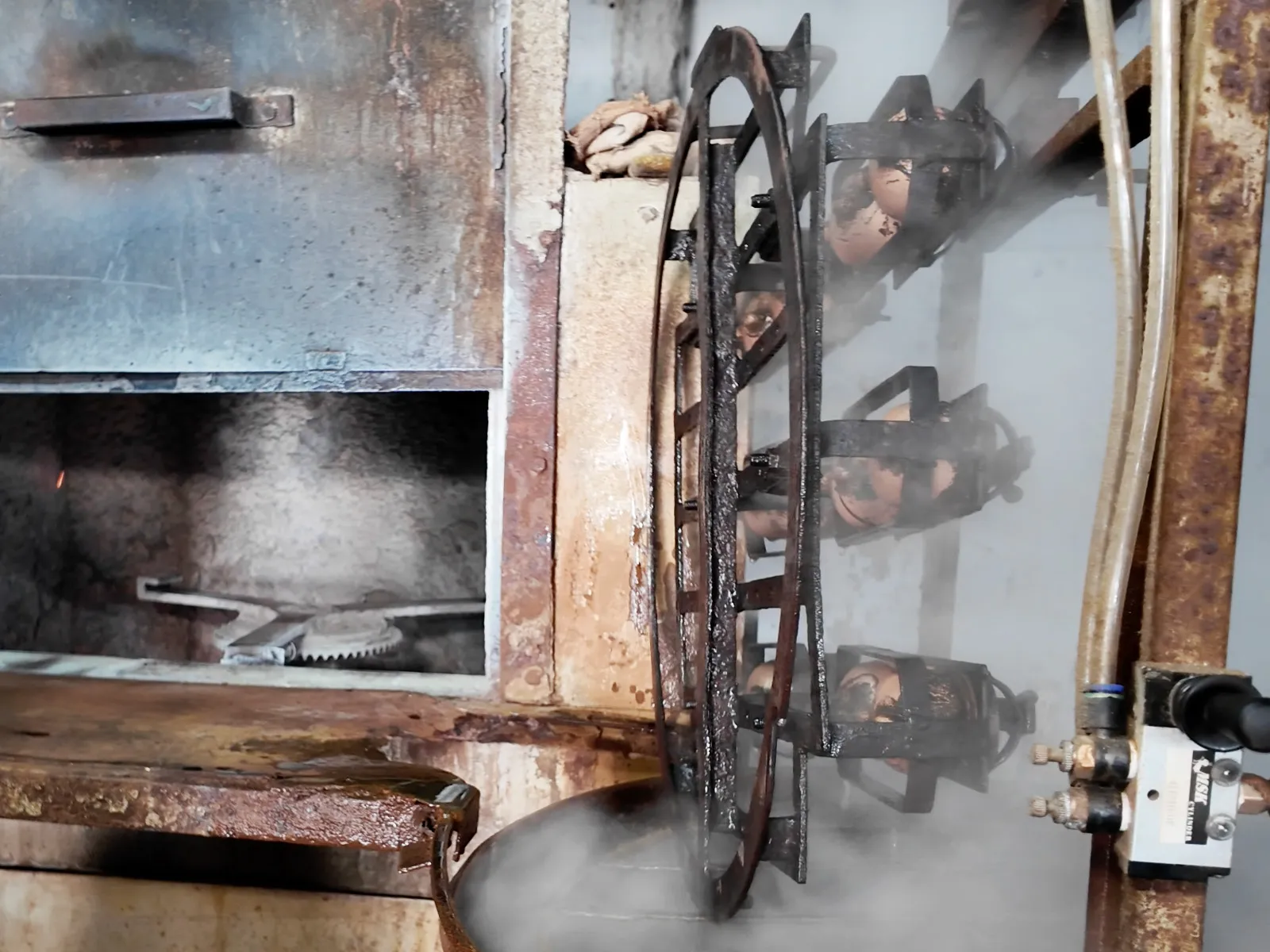
Every vinyl figure maker who has stood in front of a rotocasting furnace at 2 a.m. knows the feeling. You pull the round iron rack out of the 250°C chamber, plunge it into the cooling water tank, pry open the copper mold cover, and reach in to peel the freshly formed PVC skin off the cavity wall. Most of the time, what comes out is a hollow, soft, perfectly formed figure head. But some nights, what comes out is wrong. A wall that should be 3 mm thick reads 1.2 mm on one side and 5 mm on the other. A bubble sits right on the face. The surface is yellowed. The figure is twisted into a shape no mold ever intended. These are the nine ghosts of rotocasting — not random accidents, but mechanical signatures with root causes that trace back to the slurry, the mold, the furnace, or the operator's hands.
Why Rotocasting Is Different
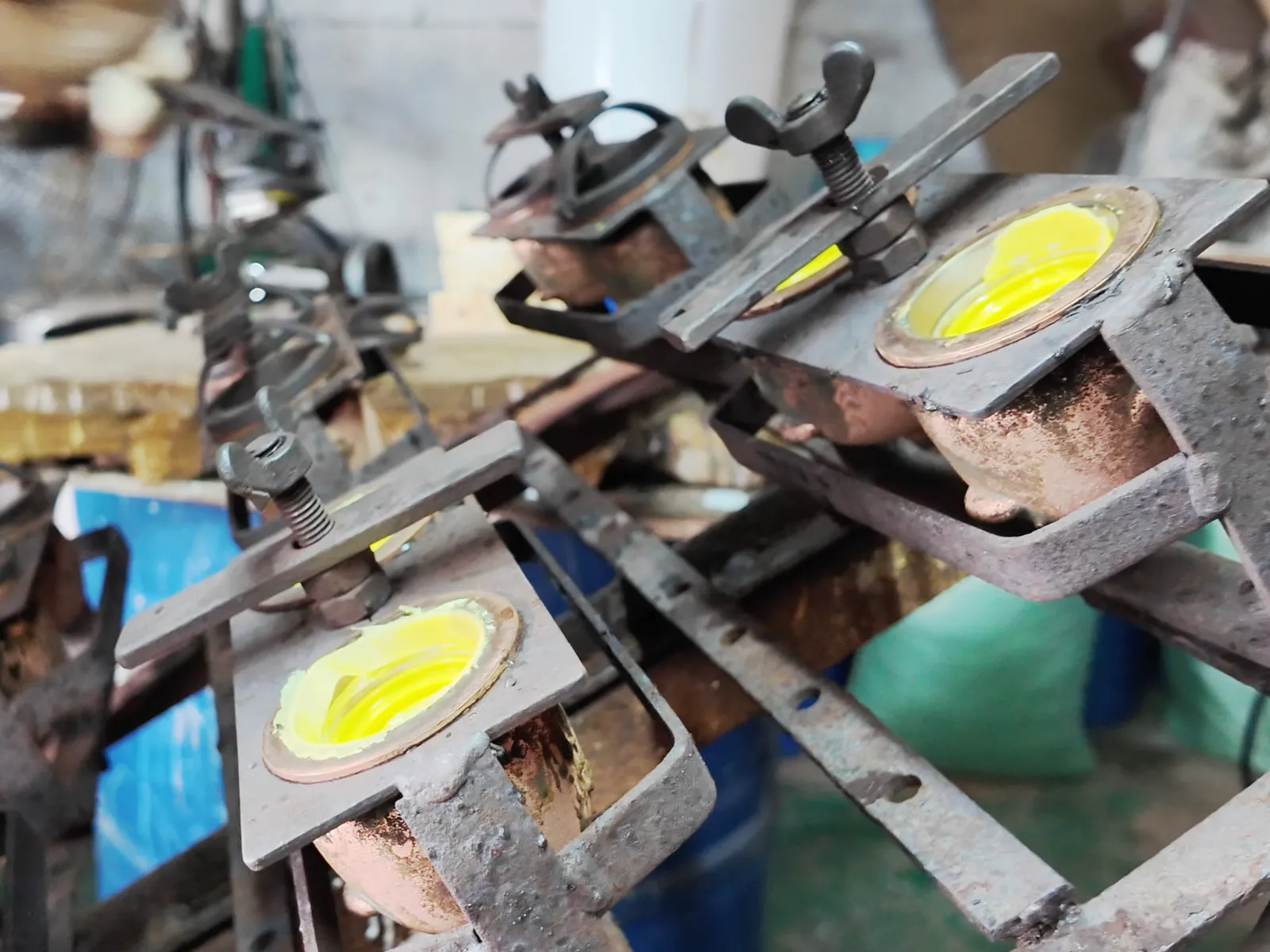
Unlike injection molding, where the machine controls pressure, speed, and packing with mechanical precision, rotocasting depends on gravity, heat distribution, and slurry viscosity. There is no screw. There is no hold pressure. The PVC slurry flows where heat allows it and gels where temperature commands it. This means a vinyl figure maker cannot simply dial in a parameter and walk away. The process — known in Chinese manufacturing as tangjiao — fills a hollow copper mold with liquid PVC slurry, then rotates the mold 360° inside a furnace at 250–280°C. After roughly two minutes, the mold exits, drops into a water bath for cooling, and the operator pulls out the hollow figure component. When something goes wrong, the vinyl figure maker has to diagnose it from the defect's appearance and trace it back through the entire process chain.
Ghost One: Uneven Wall Thickness
The figure comes out with thick and thin spots — a shoulder at 5 mm while the opposite shoulder is barely 1.5 mm. The root cause is a counterintuitive inversion: the copper mold itself has uneven wall thickness, and it acts as the heat conductor. Thick mold areas absorb more heat and transfer it more slowly, so less slurry gels against them and the figure wall ends up thin. Thin mold areas heat up faster, more slurry gels, and the figure wall ends up thick. Thick mold produces thin figure; thin mold produces thick figure. A vinyl figure maker who does not understand this inversion will keep adjusting slurry volume and wondering why the walls never even out. The fix: wrap thin mold sections with sheet iron to slow heat transfer and reduce local temperature, or add insulation to thick-mold areas to equalize the thermal profile. This is a craft skill — it takes trial and error with a pyrometer.
Ghost Two: Under-Cured Rubber
The figure surface looks fine but feels tacky or spongy. When bent, the inner surface cracks instead of stretching. The PVC never reached full gelation — furnace temperature was too low, residence time was too short, or molds were packed too densely on the rack so some received insufficient radiant heat. Thick slurry also takes longer to gel, and the standard two-minute cycle is not enough. The fix: raise furnace temperature within the 250–280°C window, extend rotocasting time, maintain 5–12 cm spacing between mold edges, and add insulation to redirect heat toward cold spots. The acetone test confirms the fix: fold the inner surface outward, apply acetone, and if the surface cracks or splits, the cure is still incomplete. A vinyl figure maker who runs this test after every adjustment ensures the fix is real.
Ghost Three: Bubbles
Small spherical voids visible on the surface or embedded in the wall — sometimes pinpricks, sometimes large enough to dome the surface. Bubbles are the defect that makes a vinyl figure maker's heart sink because they often appear only after the part has cooled. Three sources: entrapped air from insufficient vacuum degassing, high slurry viscosity from low room temperature making it harder for bubbles to escape, and humid weather introducing moisture into PVC powder that turns to steam inside the furnace. The fix: re-run slurry through the vacuum chamber — the gauge should read at least 25 inches of mercury — adjust viscosity by adding DINP plasticizer, and store PVC powder in a dry, sealed environment. For a vinyl figure maker in a humid climate, a dehumidified raw material storage room is not a luxury; it is a bubble prevention necessity.
Ghost Four: Water Marks
Visible streaks or marks on the figure surface that look like water has dripped down and stained the PVC — translucent lines or patches running vertically from top to bottom. Water has entered the mold cavity before or during the rotocasting cycle. The mold cover does not seal properly (gasket worn, cover warped, clamp insufficient), insert gaps allow cooling water to seep in, or most commonly, the operator opened the mold after the water bath and did not blow the interior dry before loading the next batch. The fix: repair or replace the mold cover seal, inspect insert gaps, and enforce the non-negotiable sequence — water bath cooling → blow dry → inspect → load slurry → seal cover. A vinyl figure maker who enforces this discipline will eliminate water marks entirely.
Ghost Five: Yellowing
The figure surface has a yellow or brown tint instead of the intended flesh tone or white. This is over-cure: furnace temperature too high, residence time too long, or molds positioned in hot spots receiving excessive radiant heat. PVC's thermal stability window is narrow — pushing the furnace above 280°C to chase faster cycle times will produce yellowing within a few shots. The fix: reset furnace temperature to the 250–280°C window and verify with a pyrometer, rearrange molds so none sit in hot spots, and apply insulation to thin mold sections. A vinyl figure maker should also check stabilizer content in the slurry formula — insufficient stabilizer lowers PVC's thermal tolerance and makes yellowing more likely even within the normal temperature window.
Ghost Six: Deformation
The figure is twisted, warped, or compressed out of its intended shape — a head that should be round is oval, an arm that should be straight is bent. This is the most heartbreaking ghost for a vinyl figure maker because the part looks perfect when it first comes out of the mold and then slowly distorts as residual stress releases. Four pathways: the slurry formula lacks release agent so the PVC adheres and the operator pulls hard to extract it; the mold has severe undercuts that mechanically lock the part; too much slurry was loaded creating an excessively thick wall; and most preventable — the part sat too long between demolding and the reshaping oven. A vinyl figure maker has a 30-minute window: if the freshly demolded part is not in the reshaping oven within 30 minutes, residual stresses set in permanently.
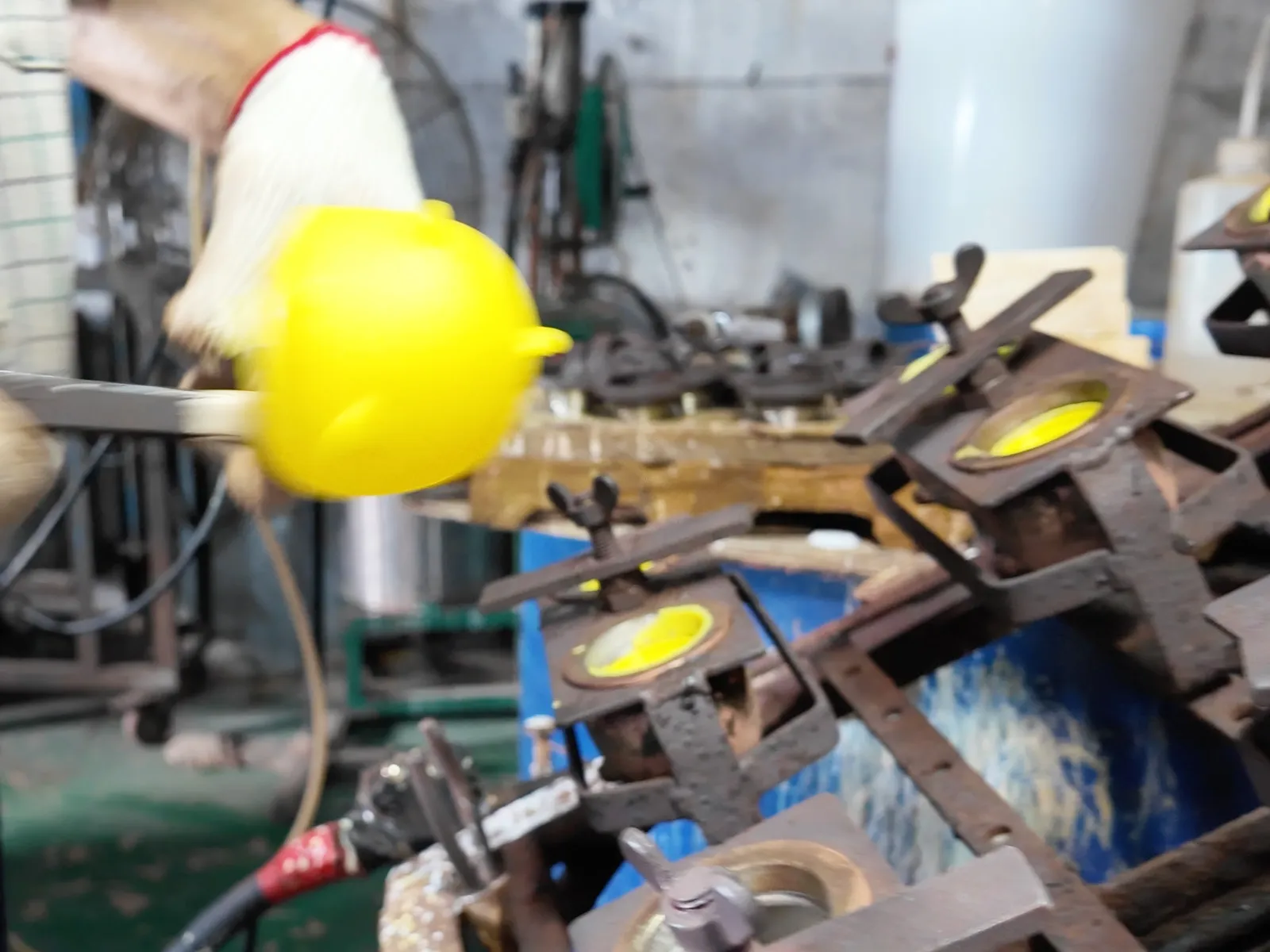
The fix: increase release agent in the slurry formula, redesign the mold to reduce undercuts, reduce slurry charge weight to bring wall thickness into the 2–5 mm specification range, and critically — get the part into the reshaping oven at 100°C for 20 ± 5 minutes within 30 minutes of demolding. The reshaping oven relaxes residual stresses and returns the figure to its intended shape. A vinyl figure maker who lets parts pile up on the workbench before reshaping is manufacturing deformation that no downstream process can undo.
Ghost Seven: Shiny Outer Surface
The figure surface has an unnatural high-gloss sheen where the specification calls for matte or semi-matte finish. The shine is localized, following the wear pattern of the mold cavity. The mold cavity surface has worn smooth from extended production — the original texture (achieved by sandblasting or etching the electroformed copper) has been polished away by the friction of rotating slurry and repeated thermal cycling after thousands of cycles. The fix: re-etch or re-texture the worn cavity surface. For copper molds with nickel cladding, the nickel layer thins with use and eventually exposes the copper substrate, which reacts chemically with PVC and discolors the figure. A vinyl figure maker who tracks mold cycle counts and schedules nickel re-plating before copper shows through will never face this problem mid-run.
Ghost Eight: Excessive Waste at the Mold Cover
A thick ring of excess PVC forms around the mold cover opening — instead of a thin, clean sprue that is easy to trim, the vinyl figure maker faces a thick, ragged collar that takes extra time to cut away and wastes material. The root cause is a mold geometry problem: the cover's draft angle does not match the opening taper on the mold body. During the rotocasting cycle, centrifugal force and thermal expansion push slurry into the gap between cover and mold body. The fix: remake the mold cover with the correct taper angle. This is a mold-shop task, not a production-floor adjustment. A vinyl figure maker who tolerates this defect is paying for it on every shot — in material waste and in operator time.
Ghost Nine: Waste at Vent Pins
The small vent pins that let trapped air escape during the rotocasting cycle accumulate gelled PVC residue over cycles, eventually blocking the vent and causing air-trap defects (bubbles) in subsequent shots. The root cause: the vent pin's conical edge — the sharp lip that shears off excess material — has been blunted by repeated impact during mold opening and closing. Instead of shearing cleanly, the blunt edge allows a thin film of PVC to build up with each cycle. The fix: re-machine the vent pin to restore its sharp conical edge. A vinyl figure maker should inspect vent pins during every mold cleaning cycle and flag any pin showing visible wear or residue buildup. Treating vent pin maintenance as a daily ritual keeps Ghost Three (bubbles) at bay.
The Quality Checkpoints a Vinyl Figure Maker Cannot Skip
Beyond the nine defect ghosts, a vinyl figure maker operates within four quality checkpoints. Cure verification via the acetone test: cut a sample, fold the inner surface outward, apply acetone — if it cracks, the entire lot is rejected. Hardness verification: cut a 12 × 12 mm square, stack to 5 mm minimum thickness, measure with a Shore A durometer — typically 40–60 for soft-touch components. Weight verification: every component has a target weight at ±1 to ±5 g tolerance; wall thickness must fall within 2–5 mm. Too heavy and hair implantation needles break; too light and the skin tears during stitching. Reshaping: place freshly demolded parts in the reshaping oven at 100°C for 20 ± 5 minutes — this is not optional, it is the process control that prevents Ghost Six from becoming permanent.
The Slurry Is Where It Begins
Many of the nine ghosts trace back not to the furnace or the mold but to the slurry preparation room. The PVC paste — a blend of PVC powder, DINP and TXIB plasticizers, heat stabilizers, release agents, and pigment — determines everything that follows. The slurry preparation is a precise procedure: weigh TXIB and stabilizer, add PVC powder in two stages, add color paste, mix at low speed for 15 minutes, scrape the paddle, add remaining powder, mix at low speed for 10 minutes, then switch to high speed for 40 minutes while pulling vacuum to at least 25 inches of mercury. After mixing, the slurry continues degassing in the storage tank for 30–60 minutes. Every morning before production, the storage tank agitator runs with vacuum for 30 minutes to refresh the slurry. A vinyl figure maker who shortens any of these steps is inviting ghosts into the furnace.
The same rule that governs all troubleshooting applies: change one variable at a time. When a vinyl figure maker sees bubbles and simultaneously increases vacuum time, adjusts viscosity, and raises furnace temperature, the bubbles may disappear — but no one knows which change solved the problem. The disciplined vinyl figure maker identifies the most likely single cause, makes one adjustment, runs three to five shots, observes, then decides the next step. After a year of disciplined troubleshooting, an experienced vinyl figure maker can walk up to a furnace, look at a defective part, and know which single variable to change — because they have changed them one at a time before and recorded the result. The nine ghosts of rotocasting are not mysterious. They are mechanical signatures of known process failures, and every one has a fix that a vinyl figure maker can apply by tracing the defect back to its root cause, not by guessing.