
From Clay to Copper: The Mold-Making Pipeline Behind Vinyl Figures Anime Production
Before a rotocasting furnace ever spins at 250°C, before a single drop of PVC slurry hits a cavity, someone has to make the mold. And in vinyl figures anime production, the mold is not just a tool — it is the genetic code of the figure. Get the mold wrong, and every single part that comes out of it will be wrong. Get it right, and a vinyl figures anime factory can spin out thousands of identical hollow heads, each one faithful to the sculptor's original vision. The process of making a rotocasting mold is not one step. It is a chain of seven transformations, each one shrinking the geometry by a precise ratio, each one inheriting the surface fidelity of the step before it.
The Seven Transformations
The rotocasting mold-making pipeline for vinyl figures anime follows a fixed sequence, documented in factory process manuals across the vinyl toy manufacturing hubs of southern China. It begins not with metal, but with earth.
Step 1 — The clay master: A sculptor hand-shapes a clay model from a hand sample or design drawing. For vinyl figures anime production, this is the only truly handmade stage. The clay master defines the facial expression, the jawline, the subtle asymmetry that makes an anime character recognizable. It is inspected, signed off, and then immediately sacrificed to the next step. Step 2 — The silicone negative: The clay master is encased in liquid silicone rubber. When the silicone cures and the clay is dug out, what remains is a precise negative cavity capturing every tool mark and fingerprint. The silicone mold is fragile, good for maybe a dozen wax pours, and exists solely to transfer geometry from the organic world of clay to the industrial world of metal.
Step 3 — The wax positive: Melted wax is poured into the silicone mold, degassed under vacuum to eliminate bubbles, and cooled. The resulting wax model is scaled to exactly 1.08× the production part dimensions. Why 1.08? Because the subsequent electroplating and thermal cycling steps will shrink the geometry, and if you start at 1:1, the production mold ends up too small. Every vinyl figures anime manufacturer knows this number — it is not negotiated, it is physics. Step 4 — The copper master: The wax sample is immersed in an electrolytic bath. Copper ions deposit onto the wax surface, building a shell layer by layer. Once sufficient thickness is reached, the wax is melted out, leaving a hollow copper master mold. This is the first metal generation, carrying the 1.08× geometry faithfully.
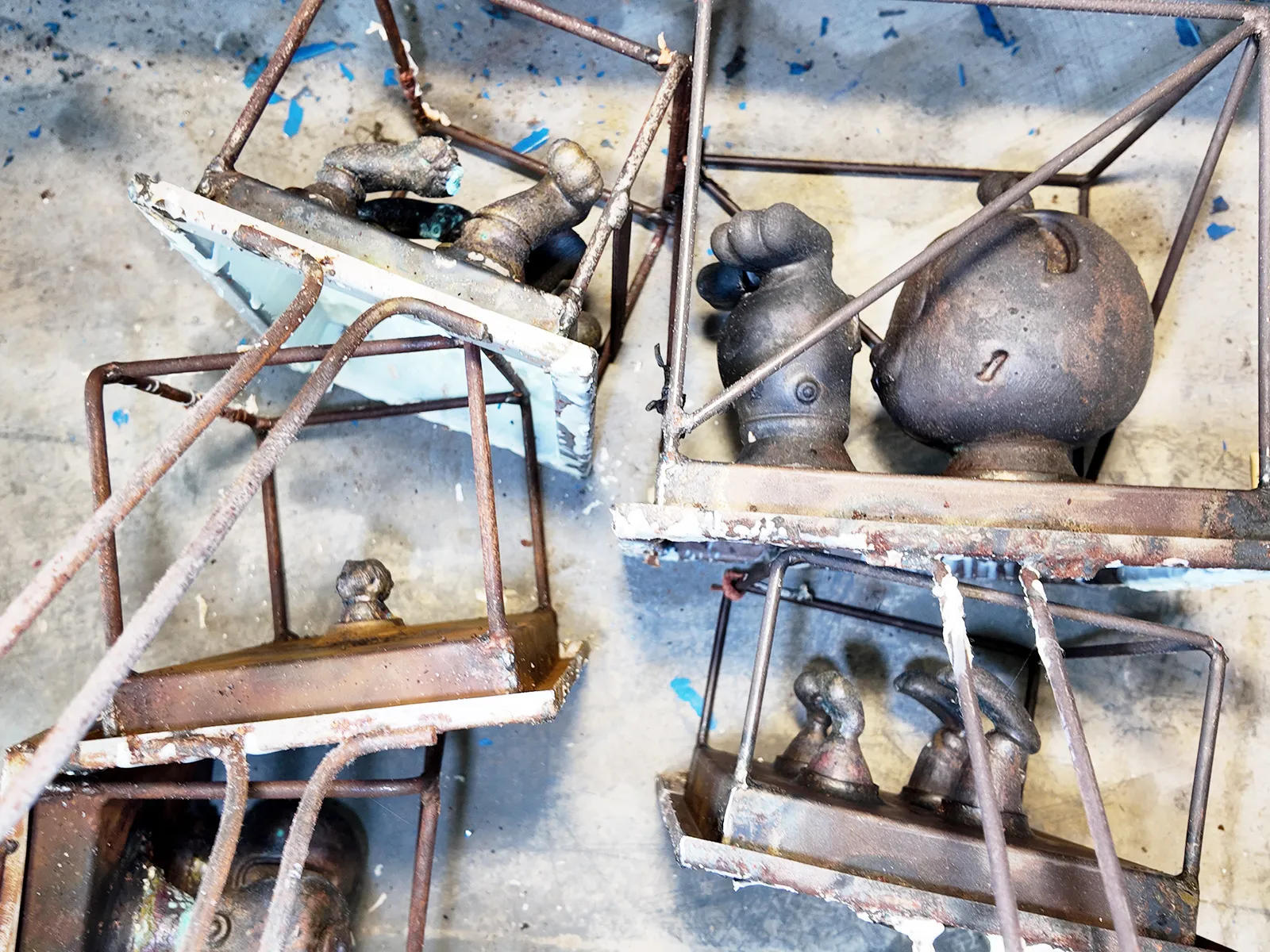
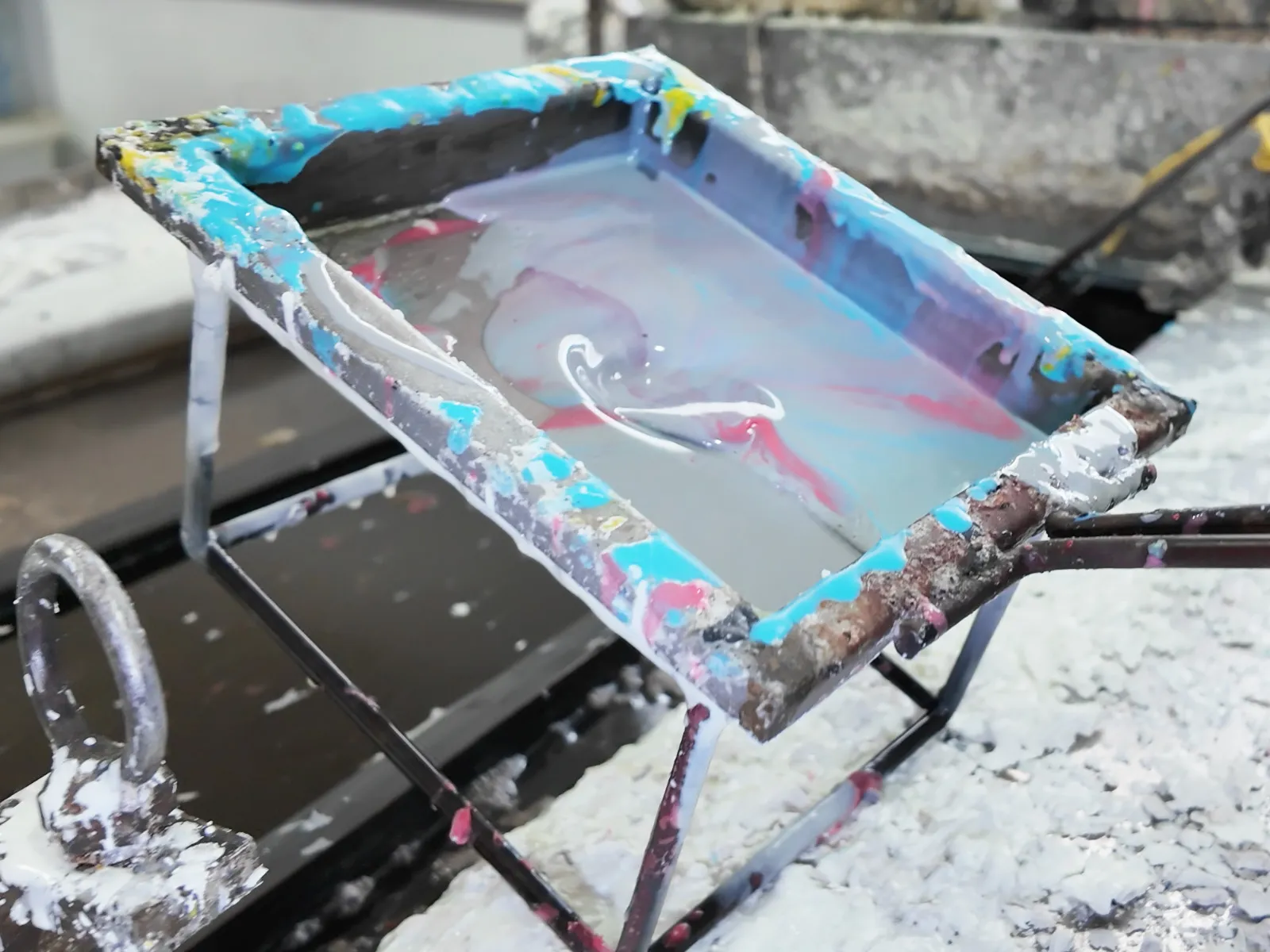
Step 5 — The master skin: The copper master is loaded onto a rotocasting machine, injected with PVC slurry, heated, cooled, and demolded. The resulting hollow PVC part is approximately 1.06× the final production part size — the copper master has shed some of that original 1.08× margin through its own thermal expansion. A vinyl figures anime factory typically produces a small batch of master skins from a single copper master, and these skins become the parents of the production mold generation. Step 6 — Batch electroforming: Each master skin returns to the electrolytic bath. Copper is deposited onto the PVC surface, yielding a production mold scaled to approximately 1.03× the final part dimensions. For vinyl figures anime production at scale, a single figure head requires 4 to 18 production molds per circular iron rack. Step 7 — Nickel cladding: A thin layer of nickel is electroplated onto the inner cavity surface. At 250–280°C, PVC slurry reacts with bare copper, releasing copper chloride gas that discolors parts and pits the mold. The nickel barrier prevents this reaction, but it wears down with every cycle and needs periodic re-plating.
Copper vs. Nickel: The Material Decision
Not all vinyl figures anime molds are copper. Copper molds dominate for smaller, detail-intensive parts — facial features, hair texture, costume details that must read clearly at a collector's scale of 10–15 cm. Copper electroforms with finer grain resolution than nickel, capturing sub-millimeter surface detail that nickel tends to smooth over. The trade-off is durability: copper is softer and more prone to mechanical damage during the aggressive manual demolding that rotocasting requires. Every time an operator reaches into a 65°C mold and yanks the PVC skin free, the copper cavity takes a micro-hit. Pure nickel molds are harder and last longer, but sacrifice surface resolution — a trade-off that only makes sense for larger, simpler parts, not the intricate face sculpts that define most anime character figures in vinyl figures anime production.
The Trial Mold Phase
No vinyl figures anime factory cuts production molds straight from the master skin. Between the master and full production, there is a mandatory gate: the trial mold pair. A pair of trial molds is electroformed from two master skins, then run through a complete rotocasting cycle — slurry injection, furnace heating at 250–280°C, 360° centrifugal rotation, water quenching, manual demolding. The trial parts are measured against the original hand sample for dimensional accuracy, wall thickness uniformity, surface finish, and color stability. The client reviews and signs off on the trial parts before mass mold production begins. In many vinyl figures anime supply chains, this approval gate is contractual: no sign-off, no production molds, no exceptions. This gate exists because a rotocasting mold, once electroformed, cannot be meaningfully corrected. If the mold geometry is off by 0.5 mm, every part it produces will be off by 0.5 mm — in vinyl figures anime production, where a collector's eye catches asymmetry instantly, that 0.5 mm is the difference between a premium figure and a factory second.
The Mold's Life on the Floor
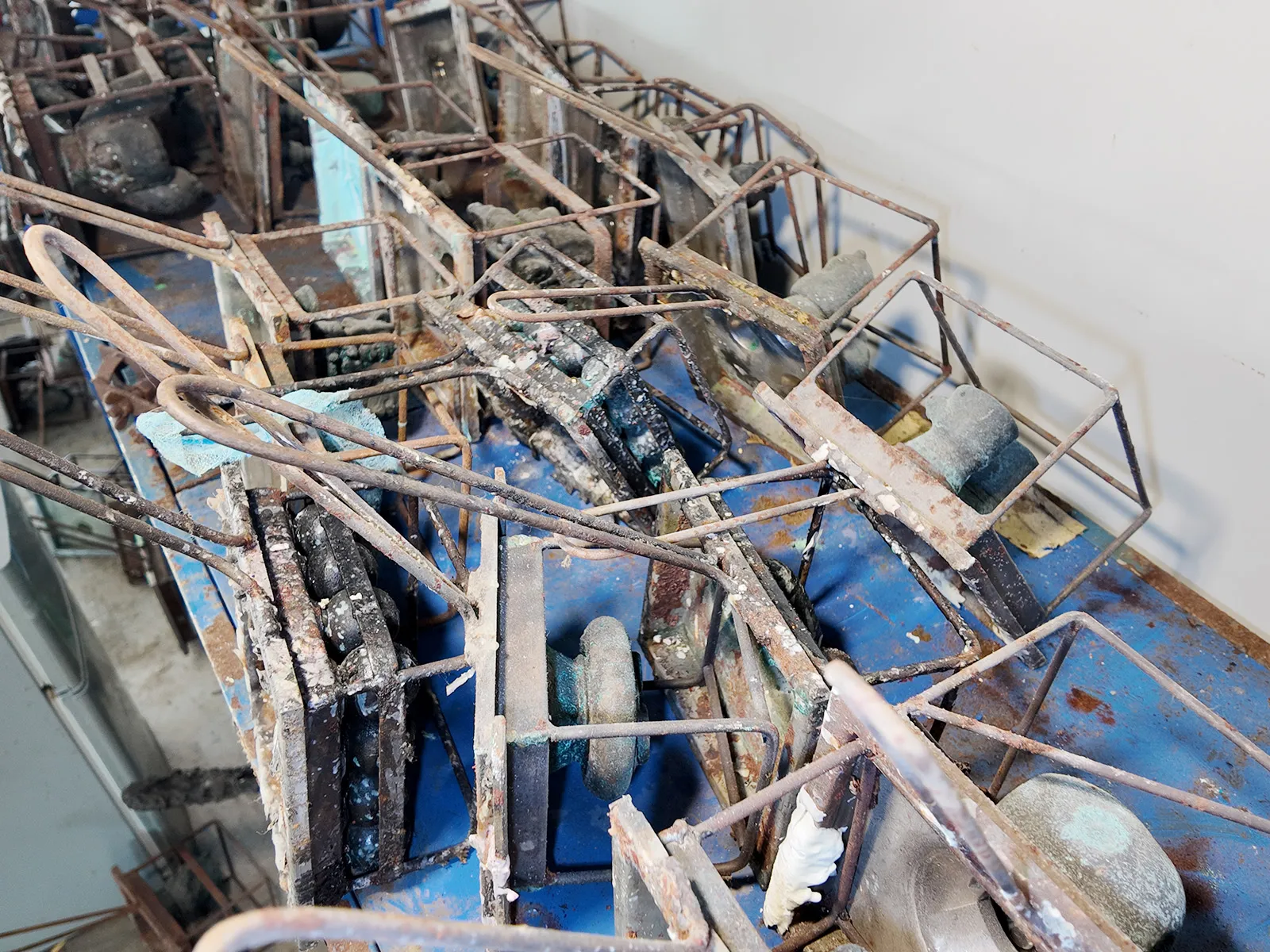
A production mold for vinyl figures anime lives three lives. Before production, every mold is test-run to confirm dimensional validity, correct slurry fill weight, manageable demolding force, and sharp vent pins — if a vent pin's conical cutting edge dulls, flash accumulates at the vent hole and mars the next shot. During production, the mold endures 250°C heating for 6–10 minutes per cycle, followed by immersion in cooling water, followed by manual demolding where the operator grips the PVC skin and pulls. The nickel cladding thins. The copper substrate gradually erodes. A mold in heavy vinyl figures anime production may need re-plating every few weeks — a maintenance rhythm that experienced factory supervisors track on a whiteboard next to the furnace.
After production, the mold must be dried, oiled, and stored in a low-humidity environment. Copper rusts. Water left in a cavity overnight will pit the surface by morning. For a vinyl figures anime factory running 22 hours a day with three rotating rack plates, mold maintenance is not a luxury — it is what keeps the defect rate below 2%.
The Math That Powers the Line
The scaling ratios — 1.08×, 1.06×, 1.03× — are not corporate secrets. They are the accumulated empiricism of decades of vinyl figures anime manufacturing, baked into every mold shop's process manual. The clay master is sculpted at 1.00× relative to the hand sample. Shrinkage through electroforming, thermal expansion during rotocasting, and the slurry's own post-cure contraction all chip away at that margin until the production mold delivers parts that match the original design within tolerance. If those ratios drift — if a mold shop electroforms at 1.04× instead of 1.03× — the production parts come out oversized. If the wax model is poured at 1.05× instead of 1.08×, the parts come out undersized, and the entire batch needs the mold remade. In vinyl figures anime production, you do not adjust these numbers on a whim. You measure, you record, and you follow the ratio.
The mold is the invisible half of every vinyl figures anime figure. Collectors see the paint, the sculpt, the packaging. They do not see the clay master that was sacrificed to make the silicone negative, the wax that was melted out of the copper shell, or the master skin that parented the production mold generation. But everything they see depends on everything they do not see. A vinyl figures anime mold is a chain of seven transformations, each one lossy, each one irreversible, each one requiring a factory floor full of people who know exactly how much copper to deposit, how long to heat, and when to re-plate. From clay to copper to the shelf, vinyl figures anime production is a story told in molds — and the figure on the shelf is just the last link in that chain.